

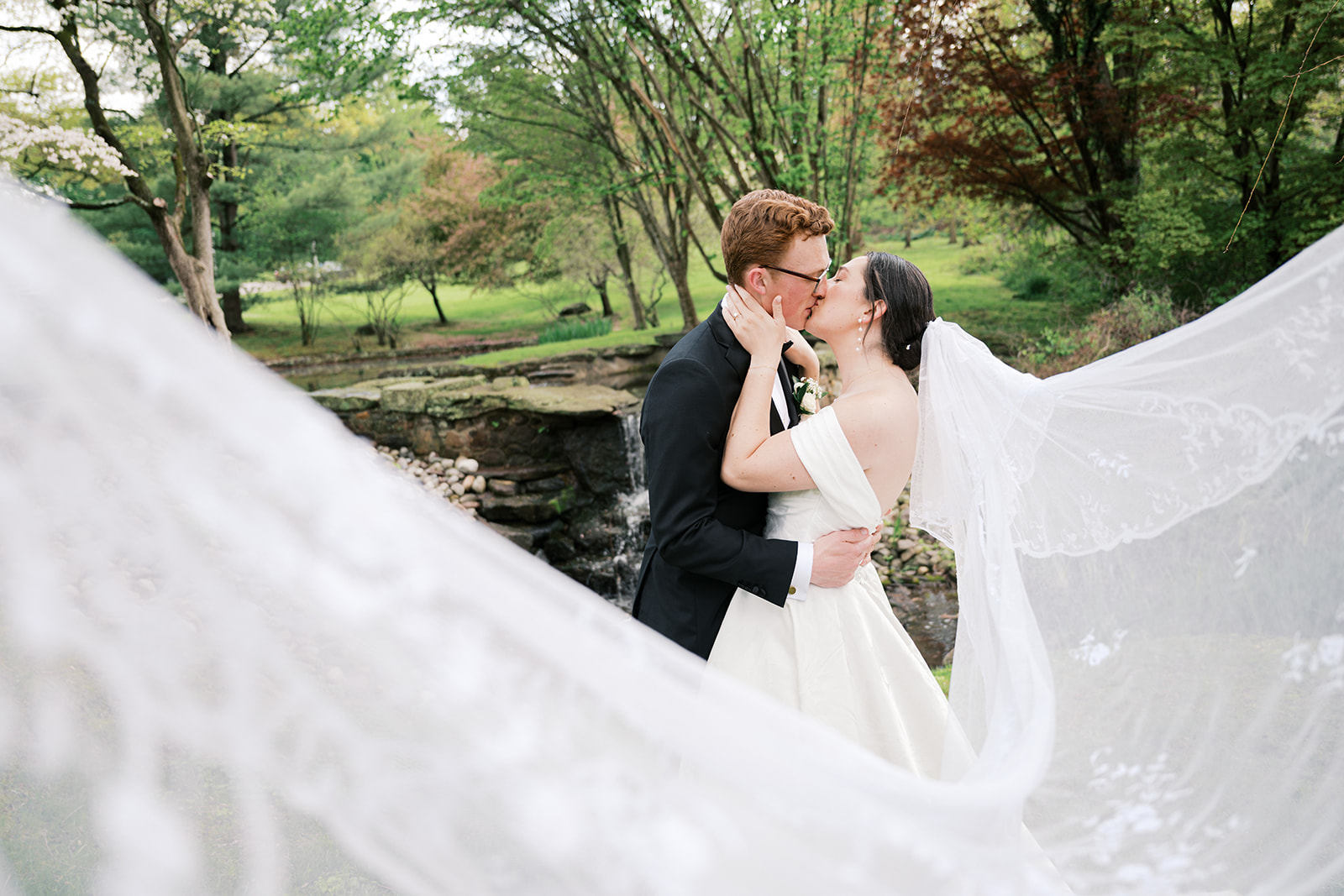

I can usually tell within ten minutes of walking into a getting-ready room whether a dress fits. Not because I’m the fit police, but because of what my camera picks up! A comfortable bride gives me forty frames of her laughing with her sister. A bride who’s holding her bodice up with one hand gives me forty frames of a bride holding her bodice up with one hand. After ten-plus years of Pennsylvania and Delaware weddings, the outfits I remember are the ones that fit you perfectly. Here are my real wedding dress shopping tips and advice on how to curate a bridal wardrobe you’ll be obsessed with, from the person documenting all of it.

Wedding Dress Shopping Tips Start With Your Personality
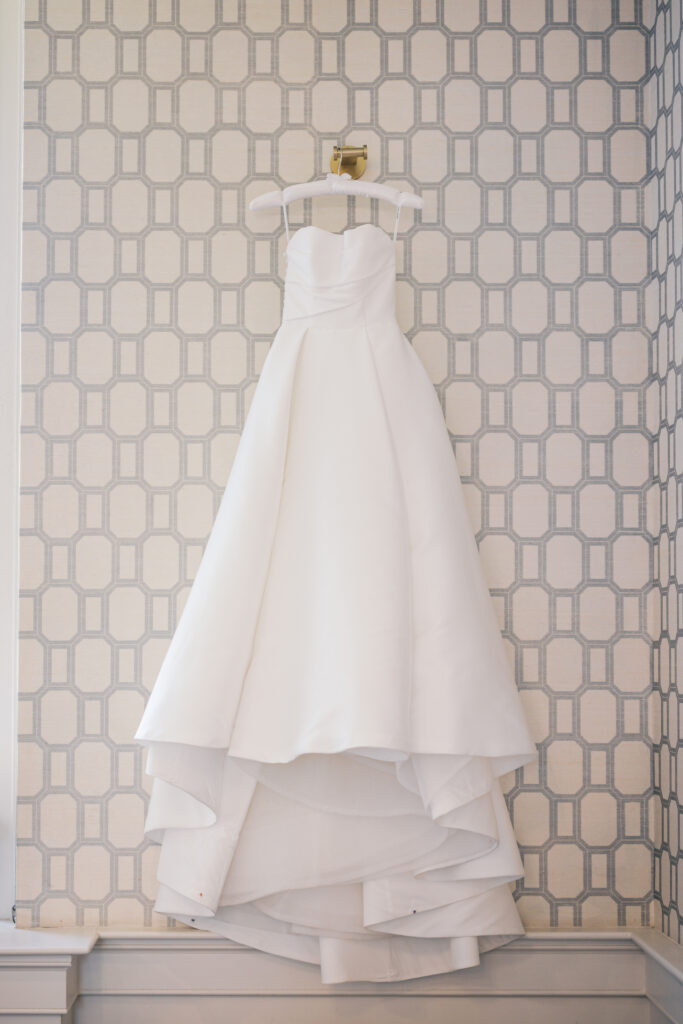
IMHO, the dress that photographs best isn’t the trendiest one. It’s the one that looks like it was made for you. I’ve shot enough weddings to spot the difference from across a room! When someone is wearing clothes that are genuinely their taste, they move differently. The dress isn’t wearing them; they’re wearing it, which means I get to photograph them.
Carolyn’s reception dress outfit at her Osteria wedding is one example I love. Every style choice was fun, unexpected, bold, and completely hers. That’s exactly why it worked!
Before you book a single dress shopping appointment, consider this: what do you actually feel like yourself in? Separates? Sleeves? Color? A jumpsuit? A second dress for the reception so you can dance without managing a train? Take your list of must haves to your appointment, and it will help you stay true to yourself despite the other opinions in the room.

How Should a Wedding Dress Fit?
A wedding dress fits when you can let go of it and not spare a second thought for whether it’s going to hold up. Here’s what that looks like in practice:
- The bodice stays exactly where it is when you exhale. No gap at the top, no sliding down when you sit.
- The neckline stays flat against you when you lean forward to hug someone.
- Straps and sleeves don’t dig in, and they don’t slip.
- The hem clears the floor by a hair in the shoes you’re actually wearing.
Here’s the most common fit problem I see: if you need tape, it doesn’t fit.
Not “it needs a little help” or “it’s just a tricky neckline.” Tape is a patch for a fit problem, and it’s a patch that fails under most of the conditions found at a wedding. Think: August humidity, ten hours, four hundred hugs, and a dance floor rave. I have watched a bride spend her entire cocktail hour in a bathroom with her maid of honor and a roll of double-sided tape, during the best light of the entire day.
Is a wedding dress supposed to be tight?
It should feel snug and secure, but not tight. You should be able to breathe all the way in, sit all the way down, bend over, and raise both arms over your head without the dress suffocating you. If you can only manage two of those three, it’s too small. If you can do all three but the bodice drops when you stand back up, it’s too big through the ribcage.

Bridal sizing also runs small and doesn’t match your street size, which is how people end up ordering by number instead of by measurement. Your stylist measures you, orders to the measurement, and alterations handle the rest.
What does a properly fitted bodice look like?
A well-fitted bodice holds you at the ribcage, not at the bust. If your support is coming from the top edge of the dress, gravity is going to win out before the toasts. If it’s coming from a snug band under the bust plus built-in cups or boning, you can dance all night and never think about it.
So if you’re tempted to consider tape as the solution, ask about the alternatives first. Can it come in at the side seams? Should cups be sewn in? Can the straps be shortened? Your seamstress will know which of those your particular dress can take, and any of them beats tape.
Can You Sit, Eat, Hug, and Dance in Your Wedding Dress? Here’s The Four-Move Test
There are several ways you can test whether or not your wedding dress is going to be a hit or a hindrance on your wedding day. At every fitting, start by sitting down in a chair. Raise both arms over your head. Hug the person who came with you. Take a full stride, then try walking up some stairs.

If any of those four causes you to fully reset afterward, the dress is going to force you to make that same reset roughly two hundred times on your wedding day. And every reset is a potential candid moment interrupted. The candids you’ll love most — your dad’s face during the first look, your college roommate completely losing it during the toast — all happen while you aren’t subconsciously adjusting your outfit. True comfortability is what makes candid photography possible in the first place!
One more wedding dress shopping tip (and I’ll die on this hill): practice the bustle with the person who’s doing it, at the final fitting. Not the day of. Bustles have anywhere from three to fifteen points and arrive with no instruction manual. Your maid of honor should not be learning the system in a hallway while cocktail hour happens without you!
Season and Fabric Weight
In Pennsylvania and Delaware, we experience all four seasons (sometimes to the extreme), which means your fabric choice truly matters.
A heavy mikado gown in an outdoor garden venue in July is a long day. A silk slip dress at a January ballroom wedding means you’re cold in every pre-ceremony photo, and cold reads on camera. Shoulders tight, arms crossed, jaw clenched. Both scenarios are avoidable with one conversation at the shop.
Here’s what I’d tell you if we were dress shopping together:
- Summer here is humid, not just hot. Satin holds heat and shows moisture. Chiffon, organza, and light silk breathe and move.
- Crepe is beautiful and wrinkles exactly where you sit. If you’re going from ceremony to reception with a drive in between, just know that going in.
- Tulle and anything with real volume is a gift outdoors in a breeze and a potential problem in a narrow ceremony aisle. Plan accordingly!
- Fall and winter can accommodate more structure like mikado, heavier satin, lined lace, and long sleeves. This is also when a cape is a lovely choice, and capes photograph beautifully on grand staircases, jus’ sayin.
| Wedding Season in PA and DE | Ideal Fabric weight | What the Camera Sees | Watch out for |
|---|---|---|---|
| Spring | Light to mid: crepe, chiffon, light satin | Soft movement in garden light | Wind, and temperatures that swing 25 degrees by evening |
| Summer | Lightest: chiffon, organza, light silk | Breathability and movement outdoors | Heat retention and visible moisture on satin |
| Fall | Mid to heavy: mikado, heavier satin, lined lace | A style that matches the season and holds up in cooler, lower light | Evening chill (plan a cover!) |
| Winter | Heavy: mikado, brocade, lined and sleeved | Rich texture and layers indoors or out | Overheating in a warm ballroom |

How Wedding Outfits Photograph: What My Lens Sees
This one’s from the photographer’s side of the room. Your stylist knows fit and construction better than I ever will — what I know is how these fabrics and colors behave across twelve hours of changing light. Some of my favorite things to flag:
- Ivory, diamond white, and true white read differently against your skin and against a green Pennsylvania garden in June. True white can go slightly blue in open shade. Ivory warms up beautifully in late light. Look at your top choices by a window in daylight, not just under the dress shop’s spotlights.
- Heavy all-over beading in direct sun turns into a thousand tiny highlights. Gorgeous at golden hour, in candlelight, and under a disco ball, but tricky at an outdoor ceremony at noon.
- Thin crepe shows everything underneath it. It’s not forgiving for bra and underwear lines, seam edges, and yes, tape. Bring neutral line-smoothing undergarments to your dress fitting to see how your final look will turn out.
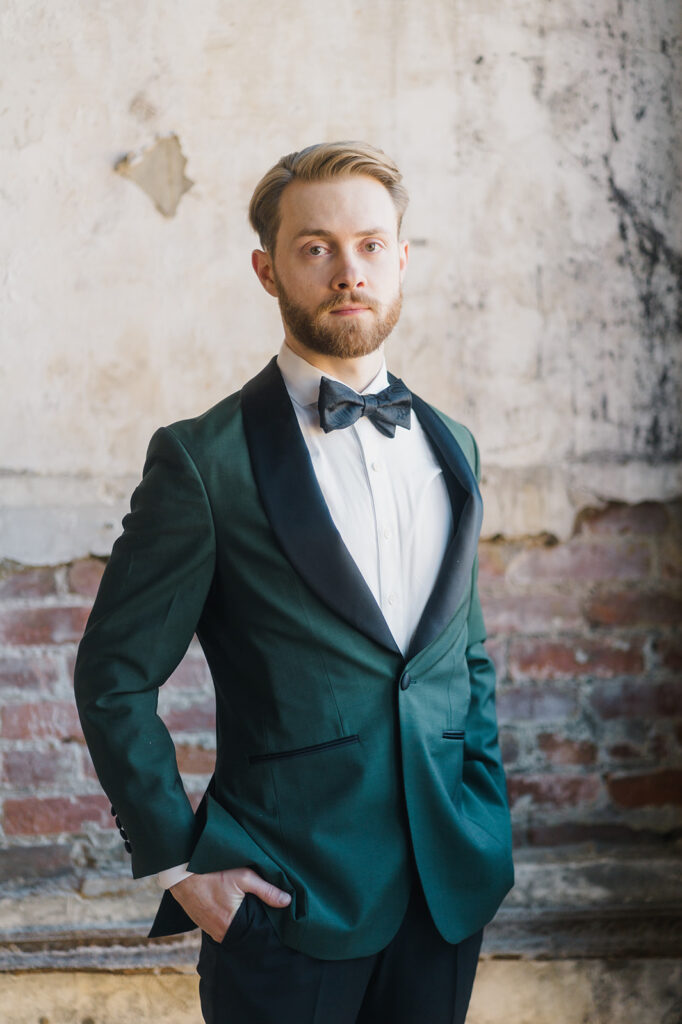
- When in doubt, a black tux or suit is the most classic, elegant thing grooms can wear, and it photographs beautifully. You can get fancy and play with texture, opting for a grosgrain lapel, a shawl collar, or a subtle weave in the fabric.
None of this means don’t wear the thing you love! It means first think about what’s important to you and wear the thing you love. And then tell me all about your outfits ahead of time.

When to Start Wedding Dress Alterations (and Finding a Tailor Who Knows Modern Gowns)
Start sooner than you think. A typical wedding dress alterations timeline looks like this:
| Timing before the wedding | What happens |
|---|---|
| Before you shop | Set your budget, book appointments, and read up on wedding dress shopping tips |
| 8 to 12 months | Order the gown. Most designers need this much lead time, and rush fees are real. |
| 2 to 3 months | First fitting. Bring your real shoes and real undergarments. |
| 1 to 2 months | Second fitting. Hem, bustle, any structural changes |
| 2 to 4 weeks | Final fitting. Small adjustments only |
| 1 to 2 weeks | Pickup, steaming, and bustle practice with whoever’s doing it! |
If you’re planning any design changes (adding sleeves, liner, lace appliqués, etc.), make sure your seamstress knows at your first fitting appointment so they can factor this into your overall alterations timeline!
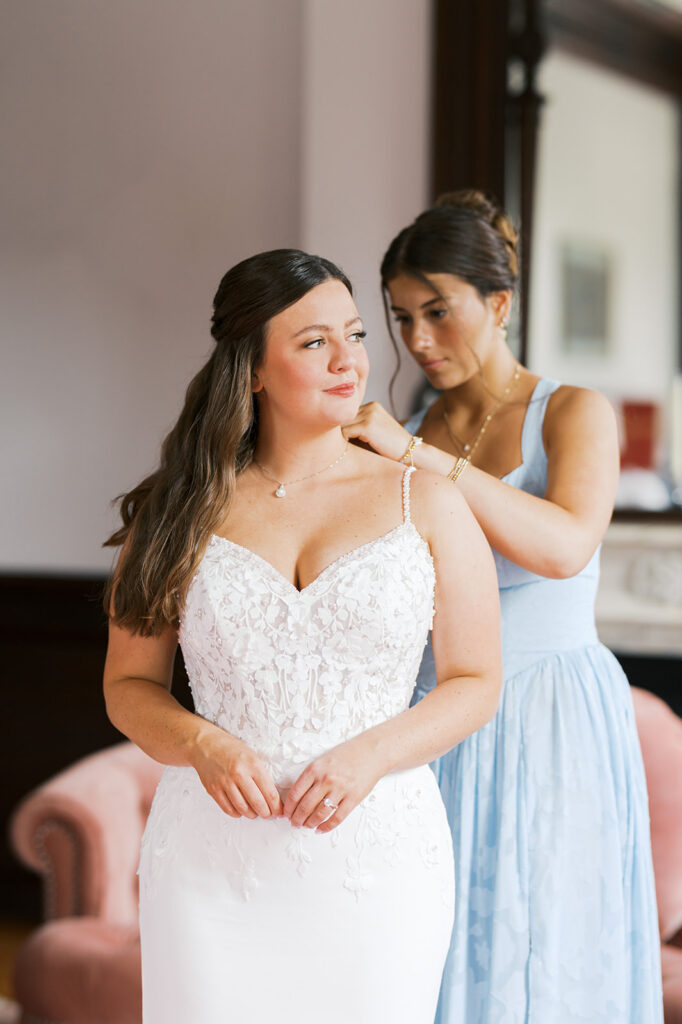
How to choose a wedding dress alterations specialist:
- Ask your dress shop who they send people to. A good shop like Lovely Bride Philly has seen hundreds of samples and knows whose hems hold.
- See finished work on real bodies, not just dresses on hangers.
- Ask your seamstress whether they’ve worked with your fabric. Crepe, structured corsetry, and heavy beading are three completely different skill sets.
- Read reviews and look out for the ones that specifically mention fit and quality of the work.
Decades of experience is genuinely valuable, and it’s also not the same thing as experience with your gown. Modern silhouettes are built to sit differently than the dresses some alteration specialists trained on, which is why “what have you worked on recently?” tells you more than “how long have you been doing this?” Ask to see recent work, and you’ll know fast. Shoutout to every seamstress who has quietly saved a wedding morning — they’re out there, and they’re worth finding early.
What to bring to your wedding dress fitting
Bring the shoes, undergarments, and veil you’re wearing, plus one person whose opinion you trust.
Your hemline gets measured against those specific shoes, so they come to every fitting. If you swap them later, match the heel height exactly — otherwise you’re paying to hem the same dress twice!
Wear Comfortable Wedding Shoes (And Have A Backup Pair)
Make sure to buy your wedding shoes before your first dress fitting since all your alterations depend on them. If you’re planning to have a second wedding dress for your reception, decide whether or not that dress needs a different pair of shoes too. Many brides select a cute pair of sneakers, chic cowgirl boots, or dressy flats to go with their reception dress since they know they’ll be dancing.

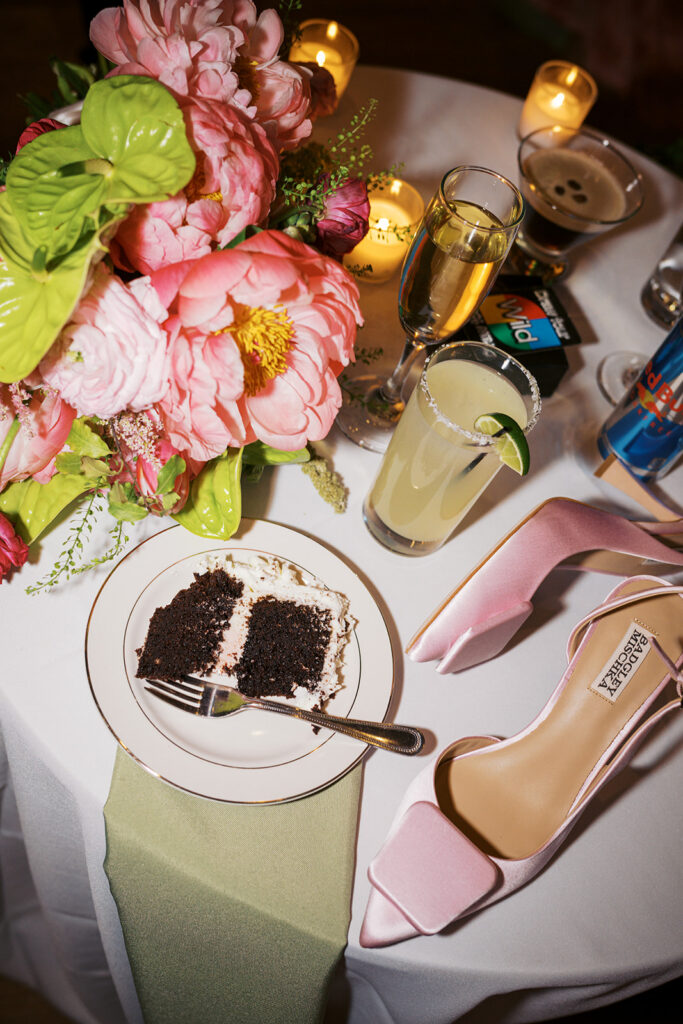
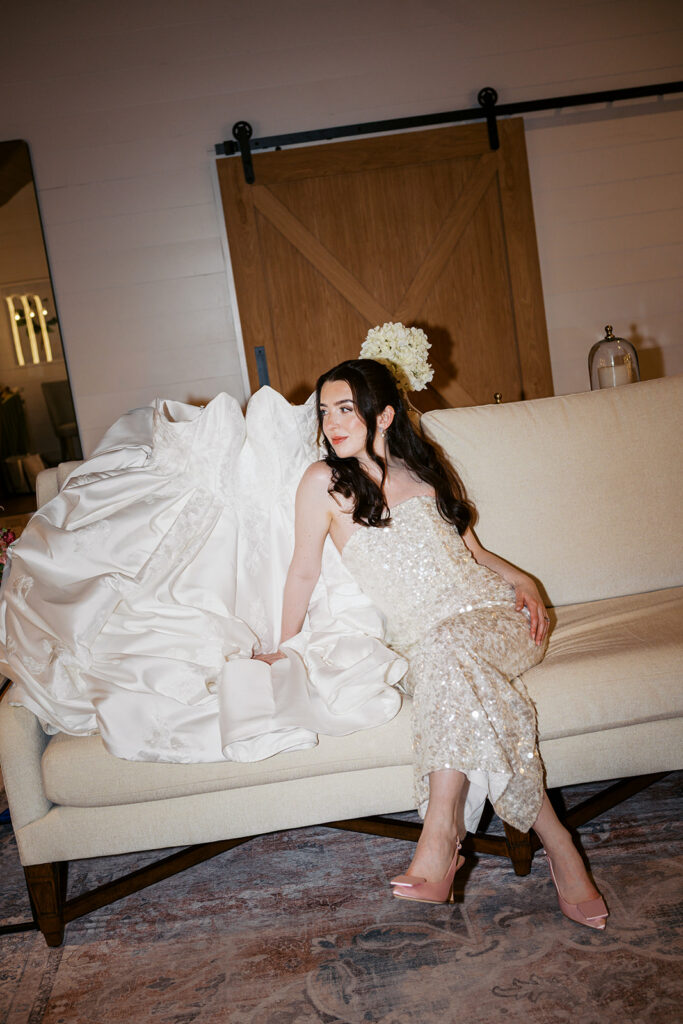
Remember—the best candids of the night happen late! The dance floor bumpin’, cutting your cake, your uncle attempting something ambitious to a Harry Styles song. If your feet are finished by then, you’re going to be in pain during the best photos of your reception. The backup flats, the sneakers, or the block heels are what get you through hour eight.
One Philly-specific note. Cobblestone is real; it’s everywhere in Old City, and it eats stilettos for dinner. If we’re shooting anywhere near Elfreth’s Alley or the Old City loop, bring something you can easily walk a block in.
Groom and Partner Attire: Tailoring, Collars, Socks, and Accessories
For grooms planning their wedding attire, here are some pointers on how a suit should fit, how to accessorize, and a few notes on color choice.
How Should a Groom’s Suit Fit?
A groom’s suit fits when the shoulder seam lands exactly on the shoulder. Everything else can be adjusted. That can’t. Off-the-rack and properly altered beats custom-and-rushed every time, so start with the shoulders and let your tailor handle the rest.
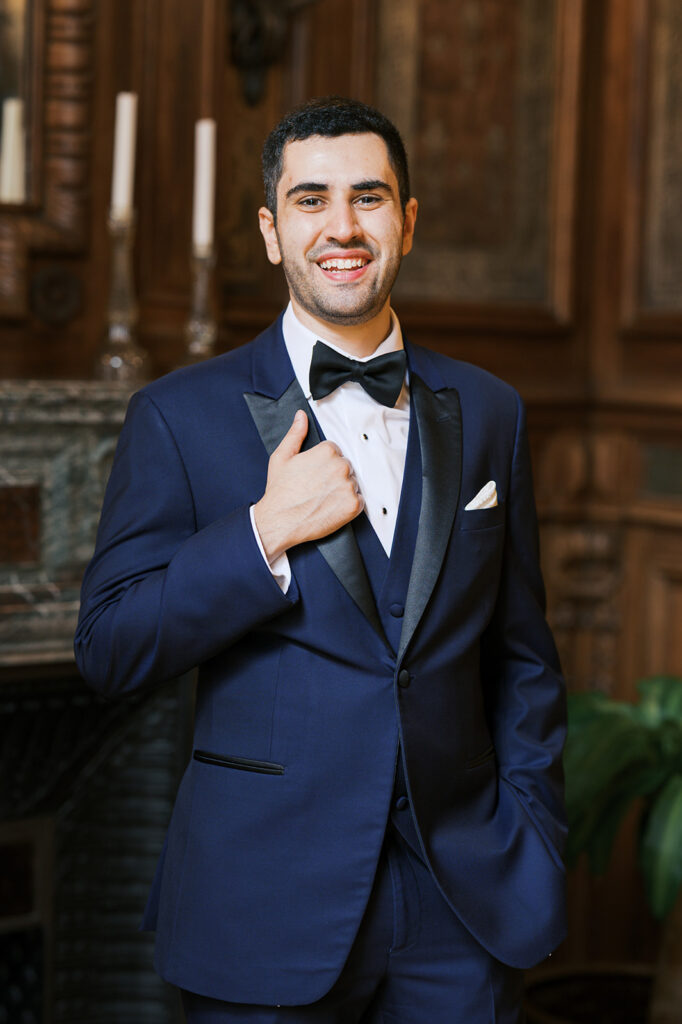
*Ben’s custom jacket at this Excelsior wedding is a good reference point — modern, tailored, and completely him. He ordered this look from Knot Standard, which you can either shop online or visit in person at select Nordstrom locations.*

Groom Accessories
- The collar. Notch, peak, and shawl are three different moods. Peak lapels photograph sharper and read more formal. Shawl collars are smooth and lean black-tie. Notch is the default, which is fine, but you have options, and a lot of grooms don’t know that.
- Socks. You will be photographed sitting down, during the ceremony, at dinner, and in the getting-ready shoe shots. Pick something you’d be happy to see printed. Clashing is a choice, so make it on purpose.
- A watch. And yes, wear one! It’s the accessory that shows up in detail shots, ring shots, and every hand-on-their-back frame all day long. If it was your grandfather’s, even better. Tell me, and I’ll make a real photo op out of it.
- A pocket square, a belt that matches your shoes, suspenders if the jacket’s coming off at the reception, and a boutonniere that isn’t the same single rose as the other five guys.




What Color Suit Should Grooms Wear?
A black tux is forever the classic choice, and I’m always glad to see one. Midnight blue, charcoal, and tan are great if you want something a little different. If the ceremony’s outside in July, linen or a lightweight wool blend will save you in whatever color you pick.
Wedding Outfit FAQs

What are the most useful wedding dress shopping tips?
The most important wedding dress shopping tips are to shop for fit over size, bring your real shoes and undergarments to every fitting, choose a fabric weight that matches your season, and book alterations three to four months out. A dress that fits properly is the one you’ll feel most confident in!

How should a wedding dress fit?
A wedding dress should stay exactly where it is without any help from you. The bodice holds you at the ribcage rather than at the bust, the neckline stays flat when you lean forward, and the hem clears the floor in the shoes you’re actually wearing. If you have to hold any part of the dress up, the fit isn’t finished yet.

Is a wedding dress supposed to be tight?
A wedding dress should be snug, not tight. You should be able to take a full breath, sit all the way down, and raise both arms over your head without the dress fighting you. If you can only manage two of those three, the dress is too small.
What do I do if my wedding dress doesn’t fit on the wedding day?
Call your seamstress first, since there’s a chance they will take emergency same-day work. Your bridal shop can usually point you to someone who does! Then tell your photographer and wedding planner, so the timeline can be built around the fix instead of discovering the problem during portraits. Clips, sewn-in cups, and a quick side-seam adjustment solve more day-of fit problems than most brides expect.

When should wedding dress alterations start?
Wedding dress alterations should start three to four months before the wedding, with the final fitting 1-3 weeks out. Gowns with heavy beading, design changes, structured corsetry, or a complicated bustle need even more runway than that. Ordering the gown itself usually takes eight to twelve months, so the alterations clock starts well after the gown is on order.

How many wedding dress fittings do you need?
Most brides have three wedding dress fittings. The first handles structure and overall fit, the second covers the hem and the bustle, and the final one is for small adjustments only. Gowns with complex construction sometimes need a fourth.

What should I bring to a wedding dress fitting?
Bring the shoes you’re wearing on the wedding day, the undergarments you’re planning to wear, your veil, and any accessories you want to try on. Bring one person whose opinion you trust. Your hem gets measured against those shoes, so if the shoes change later, the hem will be wrong. You should also bring at least one trusted person from your family or wedding party who will help with bustling.

Who goes to a wedding dress fitting?
One or two people at most should go to a wedding dress fitting. A fitting is a working appointment rather than a celebration, and more opinions in the room usually means a longer and harder decision. For the final fitting, bring whoever is bustling your dress on the wedding day so they can practice.

What should the groom wear to the wedding?
Grooms should wear something tailored to the shoulder, because the shoulder seam is the one thing alterations can’t fix. A black tux or black suit is the most classic and elegant choice, and midnight blue, charcoal, or tan are great options for a groom who wants something a little different or seasonally specific. For an outdoor summer ceremony, choose linen or a lightweight wool blend in whatever color you’ve picked.

Should the groom wear a watch on the wedding day?
Yes, grooms should wear a watch. A watch appears in more wedding photos than almost any other accessory, including detail shots, ring shots, and every frame with his hand on his partner’s back. If the watch has family history, tell your photographer so it gets a portrait of its own.

Should grooms wear suits or tuxedos?
A tuxedo is the right call for an evening black-tie reception, and a suit works beautifully for everything else. A well-fitted suit will always photograph better than an ill-fitting tuxedo, so let fit drive the decision more than formality does.

What should men wear to a hot-weather wedding?
For a hot-weather wedding, men should choose linen or a lightweight wool blend with an unlined or half-lined jacket. Breathable socks matter more than anyone expects, and a three-piece suit is not recommended for an outdoor July ceremony. Lighter colors stay cooler in direct sun, and a lightweight black tux still works beautifully for an evening reception.
Wear the Outfit You Can Forget About
Curate an outfit you feel completely comfortable and confident in before the ceremony starts. That’s when you get to be fully present, and that’s when I get the photos you’ll actually hang on your walls and preserve in an album.
Get the fit right, pick your fabric for your season, buy the shoes first, and give your tailor enough runway to work. Then let’s go plan the rest of the details and nail down your photography vision!
Lindsey Ford is a top Philadelphia wedding photographer capturing engagement photos and weddings across the East Coast, and is ready to document your special moments artfully. If you’re ready to book your Philadelphia wedding photography, inquire here!

add a comment
+ COMMENTS